Clean Water and Salmon
Overview
Driving durable solutions that protect shared waters, restore salmon habitat, and reduce toxic pollution for generations to come.
Washington’s identity runs through its water — the rivers and shorelines Tribes have stewarded for generations, the salmon runs that once reached deep into the Columbia Basin, the water that irrigates orchards and sustains communities.
Washington Conservation Action works toward a future with clean water for wildlife and people, healthy salmon habitat, and communities free from toxic pollution.
We collaborate with impacted communities statewide to turn innovative solutions into pragmatic policy. We engage on issues over the long term, building deep public support and political will, while advocating for funding to get the work done.
Key Issues
Pollution Reduction
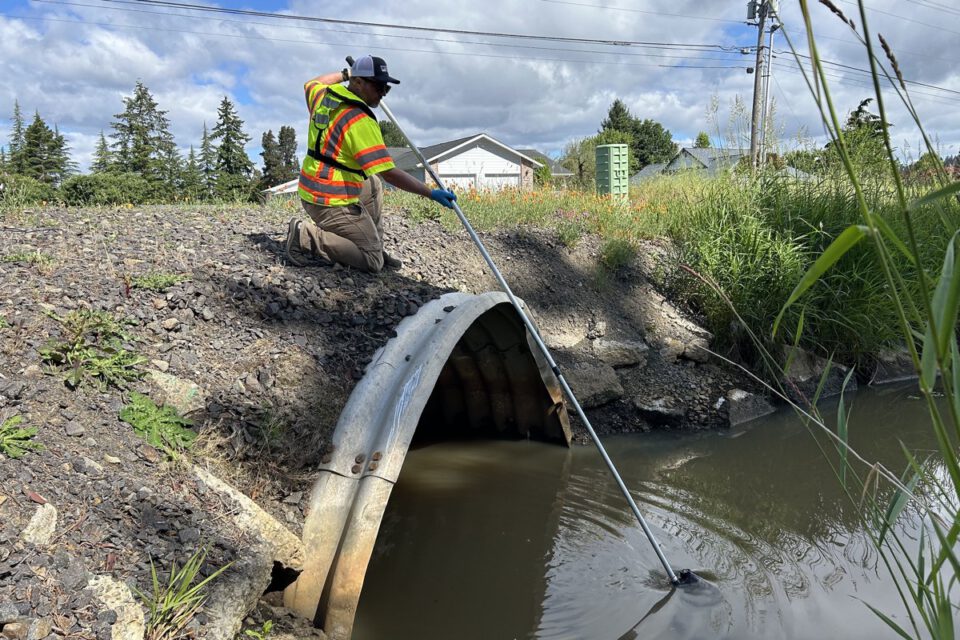
Advancing equitable environmental policies that reduce the impacts of toxics, stormwater, and oil spills across our state.
Toxic pollution, stormwater runoff, and the risk of a major oil spill all hit hardest in communities with the fewest resources to respond. Outdated laws and regulations mean communities and taxpayers — not polluters — carry the burden when spills happen and pollution goes unchecked. Stronger environmental laws can mandate cleanup of sites already contaminated, require stormwater to be treated before it reaches waterways and communities, strengthen oil transportation measures, and prevent pollution before it’s created.
We build on a foundation of existing law, including the Model Toxics Control Act, a landmark initiative passed by the people that puts a tax on hazardous substances to pay for cleaning up contaminated sites statewide; the federal Clean Water Act, which sets the baseline for what can legally be discharged into state waters; and the Safer Products for Washington Act, which phases out toxic chemicals in consumer products to protect human health. At every step, we push agencies to apply the Healthy Environment for All (HEAL) Act’s mandate in practice, making sure the disproportionate impact on communities of color and Tribes actually shapes which pollution gets prioritized and cleaned up first.
MTCA Cleanup in Yakima
Reducing barriers for Yakima County community members exposed to legacy pesticide contamination to engage in the Model Toxics Control Act cleanup process.
We partner with Hispanic and Latino community-based organizations rooted in Yakima, plus state and local agencies, to hold educational forums that walk residents through the Model Toxics Control Act cleanup process for sites affecting their community. We support them by providing the necessary advocacy tools, resources, and guidance to empower their voices. Pairing policy expertise with the trust and local knowledge those partner organizations already carry means residents who’ve historically had the least access to this process get a direct, practical way into it.
Statewide Stormwater Standards
Pushing for stronger stormwater regulations and the funding needed to back them up.
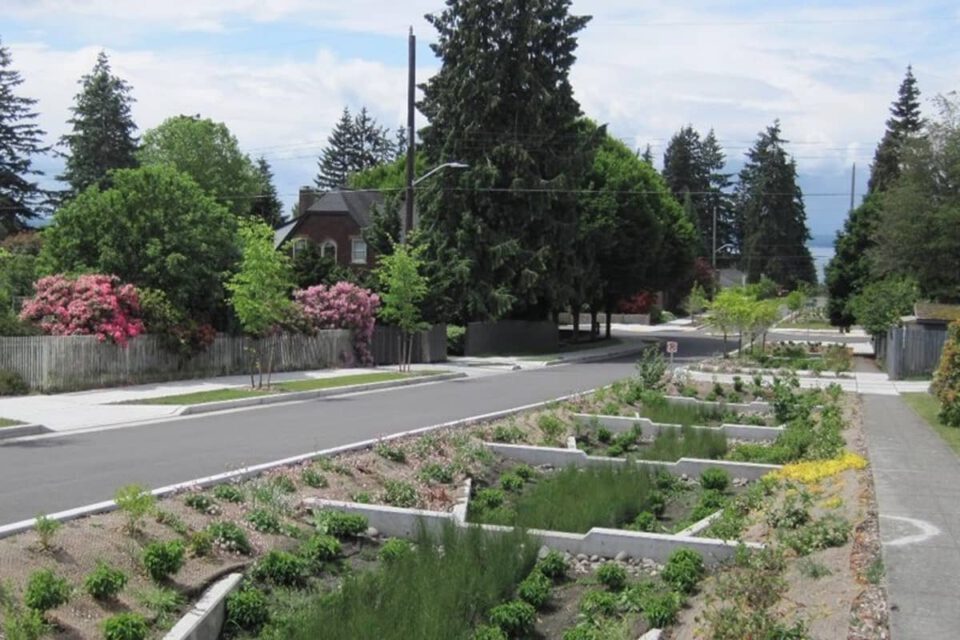
Stormwater runoff is the largest source of urban pollution for Washington’s waterways, impacting salmon habitat, shellfish beds, and communities. It carries toxic chemicals like 6PPD-quinone, the tire additive byproduct that is lethal to coho salmon. We advocate for statewide policies and regional stormwater permits that prioritize green infrastructure that improves community well-being, controls flooding, and keeps toxics out of waterways. New permit standards require jurisdictions to map and set goals for tree canopy, map overburdened communities in relation to stormwater controls, and increase their retrofit project quota.
Overhaul WA laws so oil companies pay for spills
Op-ed for The Seattle Times, co-authored with Friends of the San Juans
Salmon Habitat Restoration and Protection
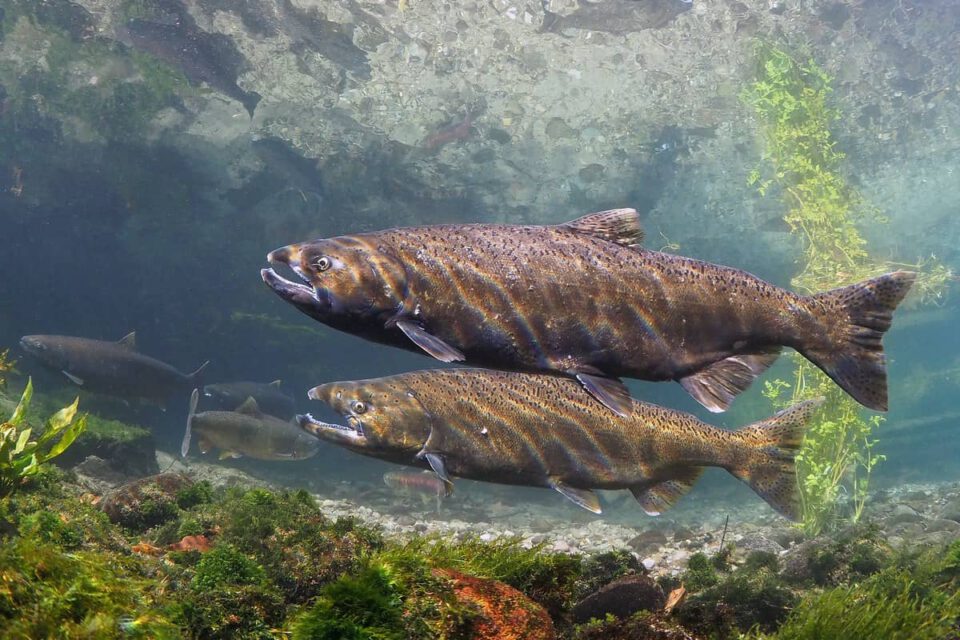
Protecting and restoring the shorelines and streams that salmon need to survive a changing climate.
A third of Puget Sound’s shoreline has already been reshaped by development, and warming rivers, lakes, and marine waters are pushing salmon toward the edge of what they can survive. Every hardened, dammed, or deforested mile of a waterway makes it harder for salmon to complete their incredible life cycle from natal streams to the ocean and back.
With Tribes and other partners, we accelerate the transition to healthy shorelines and thriving riparian habitat — the pinch points limiting salmon survival in a changing world. We push to strengthen the state’s habitat goals toward requiring net improvement in the quantity and quality of habitat over time, because simply slowing habitat destruction won’t be enough to recover salmon populations. Protecting and restoring streamside vegetation keeps water cool for salmon. Reducing hardened shorelines reverses the loss of food and habitat that young salmon and other species depend on. At the same time, we defend the Shoreline Management Act and other state laws that combine incentives and regulation to protect these places. While we must increase the rate of restoration of these spaces, we must also more effectively protect healthy stream and shoreline ecosystems before they become degraded. It’s cheaper and more efficient to protect healthy habitat than it is to restore degraded ones.
Lower Snake River Dam Removal
Restoring a free-flowing Lower Snake River to prevent salmon extinction and honor treaty obligations to Tribal Nations.
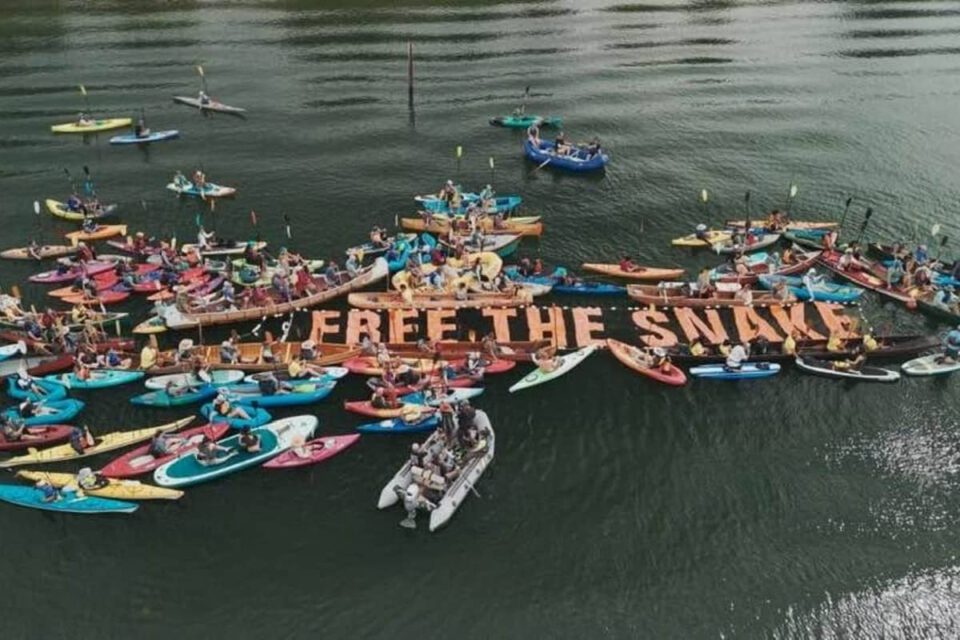
We work in coalition with roughly 20 organizations, led by the Nez Perce Tribe, in support of the Columbia Basin Restoration Initiative — a science-based plan to rebuild salmon and steelhead to healthy, abundant numbers while honoring Tribal treaty obligations and strengthening the region’s clean energy future, economy, and climate resilience. The Columbia Snake River Campaign’s goal is to deliver a solutions package, presented to Congress, that removes the four Lower Snake River dams while replacing the barging, energy, and irrigation services they currently provide, so the communities that depend on them aren’t left worse off.
Orca Recovery
The endangered Southern Resident orcas are a unique fish-eating population that are genetically, acoustically, and culturally distinct from all other orcas. Human activities have driven them to the brink of extinction, which began with a series of live captures in the 1960s and 1970s. Despite decades of recovery efforts, the population hovers precipitously at 76 individuals.
Prey availability, toxic contaminants, and vessel noise and disturbance continue to threaten their population. The single greatest threat to their survival is the depletion of their preferred prey, Chinook salmon. Research has shown that the decline in Southern Residents is closely correlated with the decline in Chinook. Navigating, communicating, and successfully finding limited prey is compounded by vessel noise and disturbance and other man-made activities that interfere with their ability to use sonar. Furthermore, orcas are exposed to toxic contaminants and legacy pollutants which have significant impacts on the survivability rate of their young.
Our work to protect and restore salmon habitat, remove fish passage barriers such as dams, and limit toxic pollution leads toward addressing the threats facing the Southern Resident orcas.
Public Empowerment
Connecting people with complex public processes at the moments that drive change.
Most people never know when a hearing, rulemaking, or public process is about to shape a decision on clean water or salmon habitat—let alone how to weigh in before it’s decided. We work directly with communities and partner organizations to understand what they care about, then bring them into those moments while there’s still time to make a difference.
Campaigns like We Are Puget Sound and the annual Orca Action Month reach people who wouldn’t necessarily call themselves environmentalists, but who care deeply about this place. Action alerts, public comment periods, community events, environmental lobby days, and volunteer opportunities give that concern somewhere concrete to go. The result: a public voice loud enough to be heard at the state, local, and federal level.
Orca Action Month
Joining the region-wide push to raise public awareness of the biggest threats facing the endangered Southern Resident orca population — prey availability, toxic pollution, and vessel noise and disturbance — while providing the public tangible actions for their protection and recovery.
We Are Puget Sound
Amplifying the voices and stories behind individual efforts to protect and restore the Puget Sound, through a touring multi-media exhibit, book, and campaign. It’s designed to inspire people to take a pledge to preserve this vital ecosystem and the livelihoods they support by focusing on various actions from the campaign’s 10 Things You Can Do for Puget Sound.
Highlights
Nature’s Scorecard
Grading how well Puget Sound cities and counties are stopping stormwater pollution at the source.
Stormwater runoff is Puget Sound’s largest source of pollution. Developed with Puget Soundkeeper, Nature’s Scorecard highlights jurisdictions advancing effective solutions and highlights those falling behind. It turns technical stormwater performance into something legislators, local officials, and the public can compare at a glance.
Kitsap Natural Resource Asset Management Program
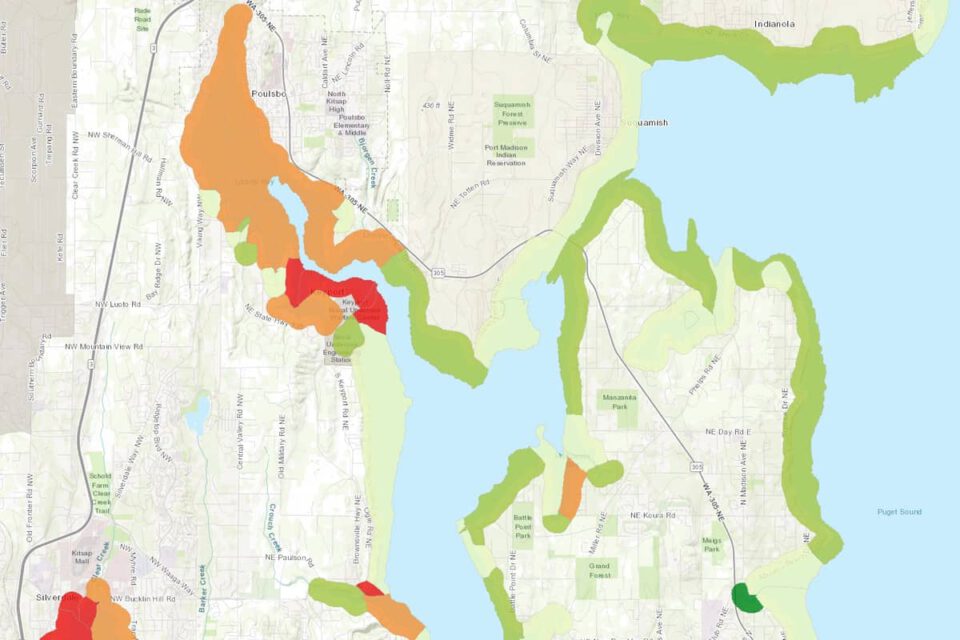
Mapping ecosystem health the way a public works department tracks road conditions.
Built with Kitsap County, Suquamish Tribe, Port Gamble S’Klallam Tribe, and Ross Strategic, the program defines natural resources — upland forests, shorelines, and streams — as community assets which must be proactively managed for the benefits they provide to salmon and humans. By utilizing a “level of service” framework, which borrows the same asset-tracking approach local governments use to plan maintenance and budget priorities elsewhere, it reframes “ecosystem services” into a comparative, decision-ready format local governments already use for other kinds of public assets.
People For Puget Sound
For nearly 30 years, People For Puget Sound and Washington Conservation Action (formerly Washington Environmental Council) worked together to protect the Salish Sea. As of 2012, People For Puget Sound is a program of Washington Conservation Action.
Together, we helped establish the Puget Sound Partnership, ensured the State adopted stronger permits to curb polluted runoff, secured the nation’s strongest oil spill prevention and response safeguards for marine waters, ensured communities adopted strong environmental safeguards for marine shorelines, pushed for statewide funding of clean water projects and toxic cleanups, and advocated for recovery measures to address the threats facing the iconic and culturally significant endangered Southern Resident orca population.