Environmental Priorities Coalition
Overview
Washington State’s Environmental Priorities Coalition is made up of 26 statewide environmental organizations working to safeguard our environment and the health of our communities through policy and budget advocacy at the Washington State Legislature. Every year, the Coalition comes together to select priorities to advance during the legislative session.
Current Priorities
Power Over Data Centers
Data centers are a growing issue with direct impacts on our energy bills, our water, and all Washington communities. We have an opportunity to hold data centers to a higher standard in our state — we can protect and further our state’s climate and clean energy laws and goals; protect ratepayers from financial impacts; maintain grid reliability; minimize impacts to communities and natural resources including air, water, and salmon; and maximize benefits to communities.
Deliver on Climate and Environmental Health Investments
The state remains in a budget shortfall, which puts climate and environmental programs at risk. For the 2027–2029 budget, this priority will push the legislature to: (1) follow through on a commitment to pay back $539 million in Climate Commitment Act funding diverted in the 2026 supplemental budget, (2) prioritize climate spending on pollution reduction and meeting state standards, (3) protect essential programs and funding sources communities depend on, and (4) restore base spending in the capital budget to natural resources and the environment.

Bottles and Cans Recycling Refund Act
Beverage containers, a large component of our state’s waste, litter Washington’s freeways, waterways, and public spaces. Only 30% of beverage containers are currently recycled in the state. That means a large amount of valuable materials are going to the landfill! The Recycling Refund Act will reduce litter and increase recycling rates in Washington by incentivizing recycling and pulling beverage containers into a clean recycling stream separated from other materials. Consumers would pay a 10-cent deposit on most beverage containers and be refunded that 10 cents when they bring containers to convenient drop-off locations to be recycled or reused.
Accelerate Safer Products for Washington
Washington’s landmark Safer Products Law protects the health of people and the environment by restricting toxic chemicals in everyday products. It tackles PFAS, phthalates, bisphenols, and other harmful chemicals, but gaps in the law stop important health protections from being adopted. This legislation would build on the program’s successes by requiring greater transparency about chemicals in products, removing barriers to protecting the public from harmful chemicals, and establishing fees on manufacturers that use high-priority chemicals to fund prevention and implementation.

Highlights
Bills To Watch
Want to stay up to date on policy in progress? WCA helps develop the Environmental Community Hot List for the State House and Senate—the 10 most important environmental bills being debated that week.
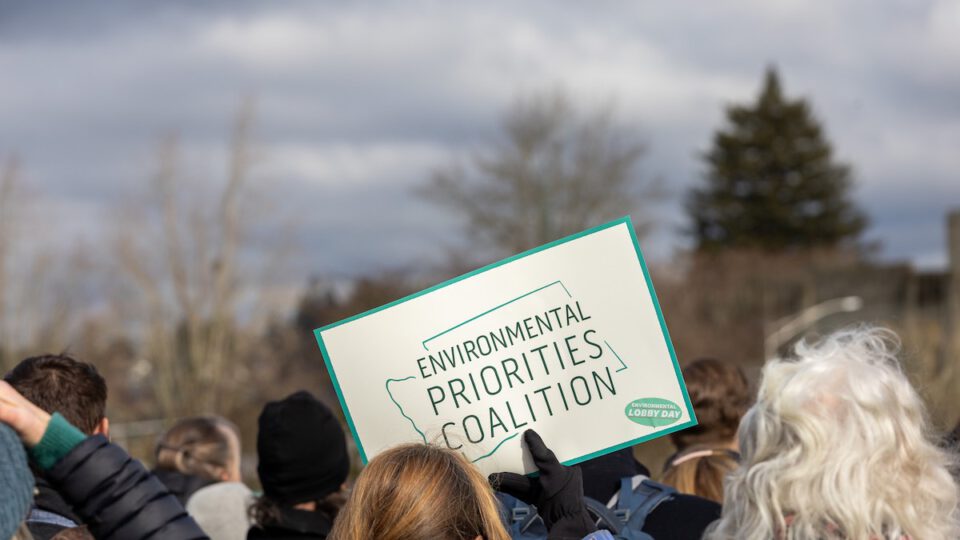
2027 Legislative Priorities Press Briefing
December 8
Virtual
Join this briefing to learn about our 2027 priorities.
Past Priorities
See an archive of priorities dating back to 2003.
Past Priorities Report
Washington’s Environmental Priorities: A look back at 12 years of leadership by the Environmental Priorities Coalition (February 2015)
Members & Partners
Coalition Members
- American Rivers
- Audubon
- Cascade Bicycle Club
- Climate Solutions
- Conservation Northwest
- Defenders of Wildlife
- Earthjustice
- Environment Washington
- Fuse Washington
- Futurewise
- Heart of America Northwest
- The Lands Council
- League of Women Voters
- Methow Valley Citizens Council
- NRDC Action Fund
- NW Energy Coalition
- Puget Soundkeeper
- Seattle Aquarium
- Sierra Club Washington State
- Sound Action
- Surfrider Foundation
- The Nature Conservancy
- Toxic-Free Future
- Transportation Choices
- Washington Conservation Action
- Zero Waste Washington
Coalition Partner Organizations
Transparency
Our program teams work across research, public education, and advocacy. Staff track their time by activity type and funding source, in compliance with nonprofit rules and regulations.
Get Involved
Join the movement for a stronger and more resilient future.
Give Now
Your generous contribution sustains our work and its impact.