The $100,000 Bullitt Prize seeks to broaden, strengthen, and diversify the current and future leadership of the environmental movement. It is a springboard for change that awardees use to address or solve issues in their community. The Bullitt Prize is awarded annually to emerging leaders that advance the conservation and environmental justice movement.
From the 2026 Summer Issue of Convene:
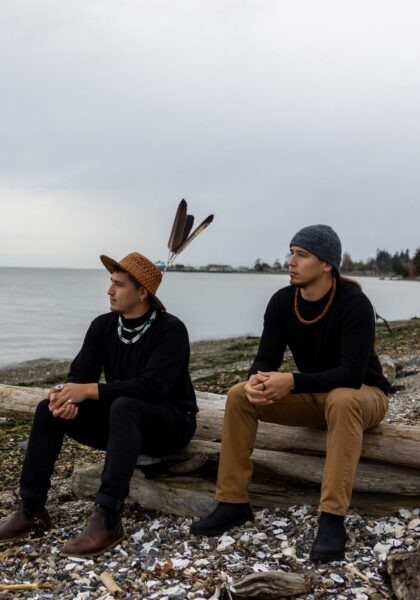
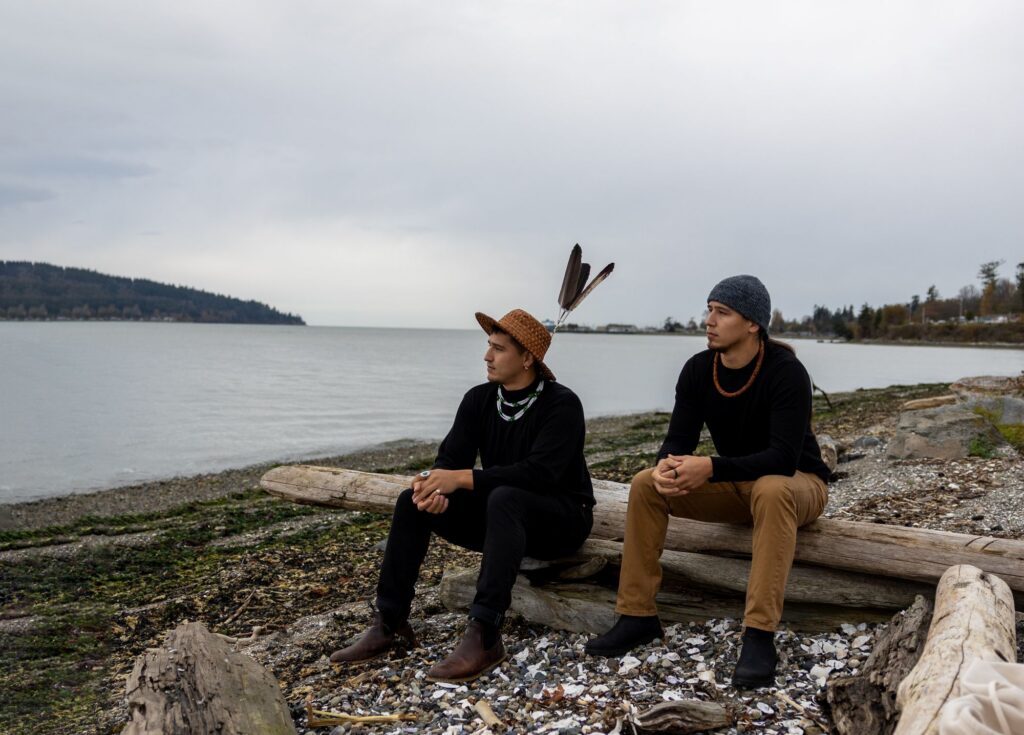
Restoring the Lummi Youth Canoe Family canoe and rejuvenating the canoe family into a year-round environmental organization has taken most of the effort of Free and Raven Borsey, since winning the 2024 $100,000 Bullitt Prize.
“Before the Bullitt Prize, we were able to do incredible things, but we were severely limited by financial constraints,” Free says. “It’s given us more freedom and autonomy to give back to our community in substantial ways.”
The brothers had hoped to have the canoe ready for the 2025 Canoe Journey to Elwha on the Olympic Peninsula. But the canoe just needed too much work: pulling out rot from the interior, replacing the fiberglass lining and more. In late spring 2025, they moved the canoe to a boat builder friend’s space, and then finally to an indoor space where they can do the finish work.
“We got the community together and lifted the boat down Holly Street in Bellingham, around 5 p.m. It takes about 40 people. The community loved it,” Free says. “The canoe is a blessing to them. She is determining how she gets fixed. She would not let us rush her to Elwha last year.”
Reshaping and restoring the canoe is very important for how it sits in the water, how it travels, Raven explains. The brothers are doing that work with the help of Children of the Setting Sun, a Lummi production company that is recording the efforts. They are planning for a late spring 2026 launch and to participate in this year’s Canoe Journey to Nisqually.
In the meantime, they’ve been doing lots of outreach. They restored two murals in Bellingham, restoring an Indigenous presence downtown, and collaborating with other Salish artists. And a local church asked them to restore a totem on their grounds. Coincidentally, the totem had be placed in 1998, on the brothers’ birthday. The Bullitt Prize allowed them to donate 100 percent of their time on that projct.
Three hundred third graders came to learn about the canoe and the significance of Canoe Journey, which is central to Native culture up and down the coast.
“A lot of the students were educated and aware of the Indigenous presence in Bellingham,” Free says.
“They came to the understanding of orcas as family.” Raven says. “It was moving to see people who don’t have an Indigenous background know some of our history.
The spirit of the cedar in the canoe is not dying but continuing its life in this form for the people.”
Raven and Free are also making plans to attend world canoe journey in New Zealand, as part of making their canoe family a year-round cultural and environmental venture. Down the line, they might even be able to travel to New Zealand and participate with the restored Lummi canoe, but that’s likely a few years away.
The Bullitt funds have also enabled the brothers to start a variety of ventures: opening a business using organic and recycled materials to showcase their artwork. They are starting with a sweatshirt but hope to expand to other things such as skis.
The funds have also allowed them the freedom to do a lot of speaking. They’ve presented at educational and advocacy events. In the spring, they were featured on a new podcast called Climate Action Figures.
“The Bullitt Prize has allowed us to say, ‘yes,’ to a lot of opportunities that we just couldn’t afford to do before,” Raven says.